Why Is Soil Testing Important for Warehouse Construction?
The ground beneath a warehouse may contain several layers of soil, and each layer can have different characteristics. Soil strength, density, moisture content, settlement behaviour, and groundwater conditions can vary significantly even between nearby locations.
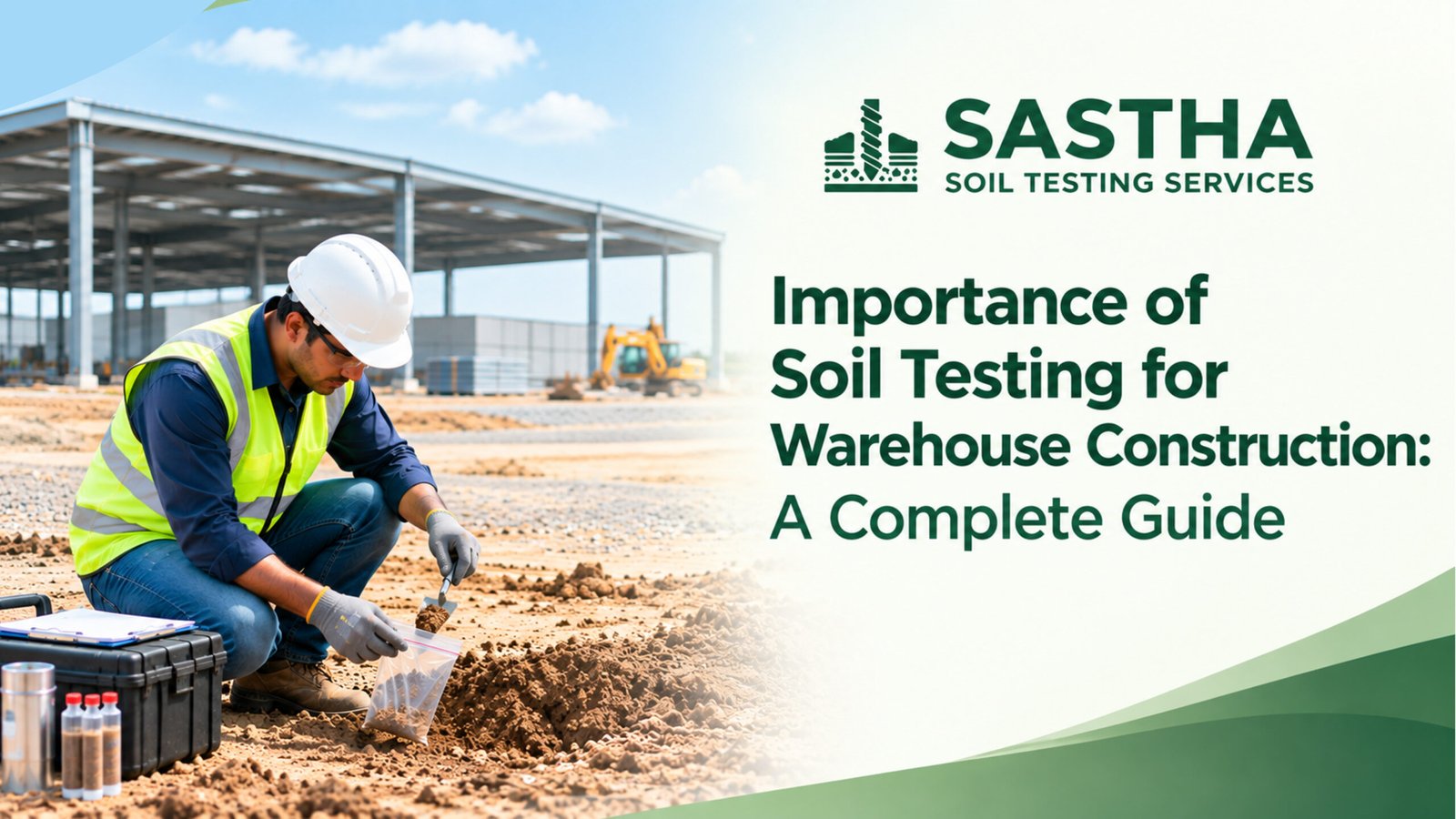
A professional soil investigation for warehouse construction provides engineers with information about these subsurface conditions before major construction work begins. This is particularly important because warehouse structures often involve heavy column loads, large floor areas, storage racks, forklifts, loading zones, and vehicle movement.
When the soil characteristics are properly understood, engineers can consider the available technical information while planning appropriate foundation and ground-related construction requirements. Without adequate investigation, unexpected soil conditions may only become apparent after construction has already started, potentially leading to delays, additional costs, or changes to the planned construction approach.
How Soil Conditions Affect Warehouse Foundations
The foundation transfers the load of a warehouse structure into the ground. The suitability of a foundation system depends on several factors, including the structural design, building loads, soil characteristics, groundwater conditions, and subsurface profile.
A professional geotechnical investigation for warehouses can provide information about the soil layers and relevant engineering properties. This information can then be used by qualified engineers as part of the foundation design process.
For example, weak or compressible soil may behave differently under loading compared with dense or stronger soil. If different areas of a site have significantly different soil conditions, engineers may need to account for those variations when developing the foundation design.
Therefore, soil testing should be considered an important part of warehouse project planning rather than an optional activity carried out after construction has begun.
Soil Testing and Warehouse Floor Stability
The warehouse floor is another important area where ground conditions matter. Warehouses frequently have large floor areas that are exposed to storage loads, rack systems, forklifts, pallet movement, and other operational activities.
The performance of the floor depends not only on the concrete itself but also on the preparation and condition of the underlying ground and subgrade. Inadequate compaction, unsuitable soil, or variable ground conditions can contribute to settlement and other floor-related problems.
Appropriate soil investigation and testing can provide information about the ground that helps contractors and engineers plan site preparation and compaction requirements. The actual floor design and construction method should be determined by qualified professionals based on the complete project requirements.
What Soil Tests Are Important for Warehouse Projects?
The exact testing program depends on the size of the warehouse, site conditions, proposed structure, and engineering requirements. There is no single set of tests that is suitable for every warehouse project.
Depending on the site and project, investigation may include field testing and laboratory analysis to determine properties such as moisture content, density, grain-size distribution, plasticity, compaction characteristics, shear strength, consolidation behaviour, permeability, and other relevant parameters.
CBR testing may also be useful where the project includes internal roads, loading areas, parking areas, or other pavement-related surfaces. Chemical testing may be considered where the soil’s chemical characteristics could be relevant to construction materials or foundation durability.
The purpose of these tests is to obtain reliable, site-specific information that engineers can use during design and construction planning.
Role of Geotechnical Investigation in Warehouse Construction
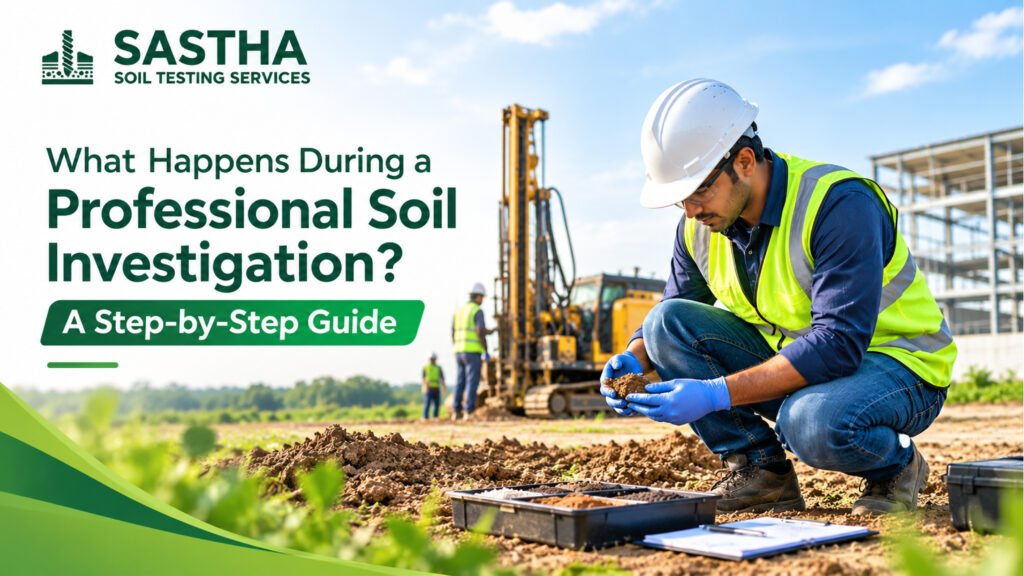
Soil testing is generally one component of a broader geotechnical investigation. A professional investigation can begin with an assessment of the proposed site and project requirements, followed by field investigation, boreholes or sampling where appropriate, laboratory testing, analysis, and preparation of a technical report.
The investigation provides a clearer picture of the subsurface conditions instead of relying only on surface observations. This can be especially valuable for large warehouse developments where the site may cover a considerable area and soil conditions may vary from one location to another.
The final investigation report can provide important technical information for engineers, helping them evaluate the ground conditions relevant to the proposed development.
Why Professional Soil Testing Matters
The quality of the soil investigation can directly influence the usefulness of the information provided to the project team. A professional testing laboratory should have appropriate testing facilities, trained technical personnel, suitable field investigation capabilities, and established procedures for handling and testing samples.
When choosing a soil testing laboratory in Madurai for a warehouse project, it is important to consider factors such as relevant accreditation, experience, available testing services, laboratory facilities, reporting quality, and the ability to carry out field investigations at the project location.
Choosing a laboratory based only on the lowest price may not provide the level of technical support required for a large construction project.
Soil Testing for Warehouse Construction in Madurai
Madurai and other parts of Tamil Nadu include a wide range of construction sites, from residential developments to commercial, industrial, logistics, and warehouse projects. Since soil conditions can vary between locations, a warehouse project should be evaluated based on its own site-specific characteristics.
Professional soil testing in Madurai can provide useful information for warehouse developers, contractors, architects, structural engineers, and other construction professionals. The investigation can be planned according to the proposed warehouse design, site conditions, and technical requirements.
For large warehouse and industrial developments, combining appropriate field investigation with laboratory testing can provide a more comprehensive understanding of the site.
Why Choose Sastha Soil Testing?
Sastha Soil Testing provides soil testing and related geotechnical and construction material testing services for construction and infrastructure projects. The company’s services include soil testing, geotechnical investigation, soil chemical testing, construction material testing, concrete testing, pile testing, water testing, earth resistivity testing, and other related investigations.
For warehouse construction projects, the appropriate testing requirements can vary depending on the site and proposed development. A professional testing laboratory can assess the project requirements and carry out the relevant field and laboratory investigations accordingly.
For projects in Madurai and across Tamil Nadu, working with an experienced and appropriately accredited testing laboratory can help project teams obtain reliable technical information during the planning stage.
Conclusion
Soil testing is an important part of warehouse construction because the condition of the ground can influence foundation planning, floor performance, site preparation, and overall construction decisions. Warehouse projects often involve substantial structural and operational loads, making it particularly important to understand the soil conditions before construction begins.
A professional soil investigation for warehouse construction provides site-specific information through field investigation, sampling, laboratory testing, analysis, and reporting. This information can help qualified engineers make informed decisions based on the actual characteristics of the site.
Whether you are developing a logistics warehouse, industrial storage facility, manufacturing warehouse, or commercial storage building, conducting appropriate soil testing before construction can help reduce uncertainty and support better project planning.